
Blog
Who Coined the Term Haptic Feedback?

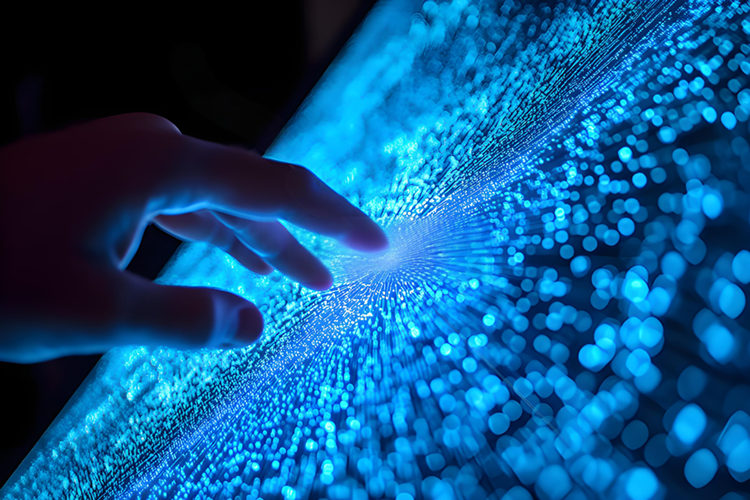
Have you ever felt your phone vibrate with an incoming message, or the subtle click on a touchscreen that makes it feel like a real button? That sensation is haptic feedback, a technology that uses vibrations, forces, or motions to create the sense of touch. But have you ever wondered who first coined the term? Where did it come from, and how did it evolve into such an essential part of modern technology? To answer these questions, we need to travel back more than a century—long before smartphones or video games existed.
The Origin of “Haptic”
The word haptic traces back to the ancient Greek word haptein, meaning to touch or to grasp. The adjective haptikós referred to things relating to the sense of touch.
In 1892, the German psychologist Max Dessoir introduced the term Haptik in his academic work to describe the science of touch perception. At that time, psychologists and philosophers were trying to categorize the human senses with greater precision, and “haptic” became a technical term to describe tactile experiences.
So while no single inventor created the word, it was Dessoir who helped establish haptic as a recognized scientific term.
The Emergence of “Haptic Feedback”
The phrase haptic feedback came later, as technology began to interact with human touch.
- World War II: Early aviation systems introduced mechanical feedback in control sticks to warn pilots about stalls. These were primitive but life-saving forms of tactile signals.
- 1960s–70s research: At Bell Labs, scientists such as A. Michael Noll and Thomas D. Shannon experimented with force-feedback systems and tactile communication. Around the same time, neuroscientist Paul Bach-y-Rita developed pioneering work in sensory substitution—using touch to “replace” vision.
- Consumer electronics breakthroughs:
- 1976: Alps Alpine launched the first tactile switch (TACT Switch™).
- 1978: Sega’s MotoCross arcade machine introduced vibration in gaming.
- 1996: Motorola’s StarTAC became the first widely popular phone with vibration alerts.
- 1997: Nintendo’s Rumble Pak brought tactile immersion to home gaming consoles.
From laboratories to living rooms, haptic feedback became a mainstream experience.
Modern Applications of Haptic Feedback
Today, haptic technology has become so integrated into daily life that many of us hardly notice it anymore—until it’s gone.
- Consumer Electronics: Smartphones use precise vibration motors, like Apple’s Taptic Engine, to simulate the feel of pressing a button. Wearables such as smartwatches rely on subtle taps on the wrist for notifications.
- Immersive Experiences: VR controllers and AR gloves provide tactile cues that make virtual interactions feel more real. Gaming consoles like the PlayStation 5 push this further with adaptive triggers and nuanced vibrations.
- Automotive and Industrial Design: Car dashboards and rotary knobs use tactile confirmation to replace traditional physical buttons.
- Healthcare and Accessibility: Surgeons train on haptic simulators, prosthetics restore touch-like sensations, and navigation apps use vibration signals to guide visually impaired users.
- Emotional Well-being: Beyond utility, haptics are also explored as tools for stress relief, learning, and emotional regulation.
Why Do We Care Who Coined the Term?
If you’re reading this, you’re likely curious about tech history or fascinated by how words shape innovation. Questions like “Who coined haptic feedback?” aren’t just trivia—they reveal why understanding its origin matters today.
It Satisfies Our Curiosity
Understanding the origin of this term satisfies our curiosity and enriches our appreciation for how technology evolves. For students, tech enthusiasts, or anyone curious about history, knowing the backstory of a word adds depth to our understanding.
It Builds Authority and Trust
Tracing haptic feedback back to its academic and scientific roots shows that it’s not just a gimmick, but a technology with a rich and credible history. Recognizing this builds trust in its capabilities and significance.
It Reveals Deeper Human Needs
The pursuit of realistic touch in technology taps into our fundamental desire for tactile interaction. This is especially relevant in today’s digital age, where stress and anxiety are so prevalent. Research from institutions like Northwestern University’s Haptic Lab has shown that certain vibrations can even help reduce stress hormones such as cortisol.
The Evolution of Haptic Technology
Today, haptic feedback is everywhere, quietly enhancing the way we interact with devices. In consumer electronics, it’s the hidden hero of your smartphone: vibrations confirm taps, notifications buzz discreetly, and virtual keyboards feel more responsive. Wearables like smartwatches use subtle taps to deliver alerts, making technology more inclusive—especially for users with hearing impairments.
Gaming has also been transformed. The PS5’s DualSense controller, for example, uses adaptive triggers that simulate the tension of drawing a bow or the recoil of a jammed gun. These tactile details pull players deeper into the experience. In cars, as dashboards shift from physical buttons to touchscreens, haptic tech fills the gap. Alps Alpine’s HAPTIC™ knobs recreate the feeling of a real dial, helping drivers adjust settings without taking their eyes off the road. With over 200 million units shipped, the technology has proven both practical and reliable.
The medical field takes haptics even further. Robotic surgery simulators allow doctors to “feel” tissues remotely, while advanced prosthetics restore a sense of touch for amputees. In VR and AR, devices like Oculus Touch controllers simulate textures and surfaces, bridging the digital and physical worlds.
And beyond technology, haptics is finding new roles in wellness. Studies show that tactile stimulation can help regulate emotions and reduce stress, which explains why haptic-based stress-relief tools are gaining attention as a natural aid for focus and relaxation.
From History to the Palm of Your Hand: Haptic Coin
While most people associate haptic feedback with smartphones or game controllers, the same principles can be applied to stress relief and focus. With the evolution of fidget toys, these devices have gradually incorporated haptic technology, giving rise to the Haptic Coin. Unlike ordinary fidget toys, the Haptic Coin features an internal magnetic structure that produces a crisp “click” when slid or pressed, delivering a satisfying vibration experience that helps reduce anxiety and enhance attention.
👉 Recommended Reading: What Is a Haptic Coin?
For individuals with ADHD or professionals under high stress, this subtle, rhythmic feedback can stimulate alpha waves in the brain, promoting focus and calmness. Think of it as a mini “haptic feedback system” in your pocket
Haptic Coin is versatile across different scenarios: in the office, it serves as a discreet tool to stay focused during long meetings; on the commute, it helps release travel tension; before bedtime, it becomes a soothing ritual. Perhaps it’s time to try a Haptic Coin and experience the simple joy of its tactile vibrations.
From Past to Present, The Future of Touch
Looking ahead, haptic feedback is poised for even bigger leaps. Advances in actuators will bring non-contact haptics, such as air vortex rings that let you “feel” objects without touching them. Integration with AI could create emotion-responsive wearables—devices that detect rising heart rates and respond with calming vibrations. In XR (extended reality) education, haptic gloves might simulate historical artifacts or language rhythms, making learning more immersive. In short, touch is becoming as important in our lives as sight and sound.
Haptic feedback has traveled an extraordinary path to get here. From its Greek roots in haptein to its role in today’s digital world, it began as a scholarly term in the 19th century, found its footing in wartime aviation, and is now an essential feature in billions of devices worldwide.
And the story isn’t over. As technology continues to evolve, so too will the ways we feel and interact with our digital environments. The next time your phone vibrates or you experience a subtle tactile response, remember the long history behind that simple sensation. For those looking to connect more deeply with the power of touch in everyday life, even a small device like a haptic coin can offer a surprisingly profound experience. In many ways, the feeling of the future is literally in the palm of your hand.