
Blog
Ultrasonic vs. Reed vs. Wood Diffusers: Which One is Right for You?

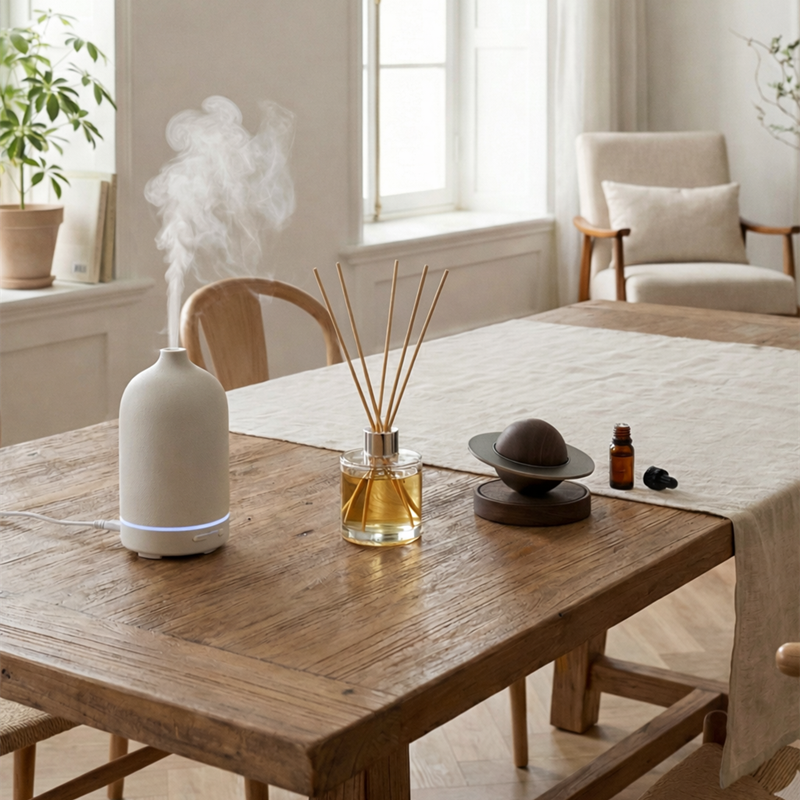
You might be thinking about getting a diffuser — but with so many options on the market, it’s easy to feel overwhelmed and unsure which one is right for you.
Don’t worry, we’ve got you covered. We compared three of the most popular diffuser types — Ultrasonic, Reed, and Wood diffusers — to break down which one truly fits your lifestyle.
Before we dive into the details, take a quick look at this comparison table. It breaks down the main differences at a glance — helping you find your perfect match without the guesswork.
Here’s a concise table outlining the key features, why they matter, and what buyers typically seek, based on common guides and reviews.
Quick Comparison Table
| Feature | Ultrasonic Diffuser | Reed Diffuser | Wood Diffuser |
|---|---|---|---|
| Noise Level | Low (Hum + Water sounds) | Silent | Silent |
| Scent Reach | High (Fills a whole room) | Medium (Small room / Bath) | Personal (Desktop / Bedside) |
| Maintenance | High (Weekly cleaning to prevent mold) | Medium (Occasional reed flipping/replacement) | Low (Just reapply oil; minimal cleaning) |
| Safety | Medium (Mist residue & furniture damage) | Low (Risk of spills from open liquid) | High (No spills or electricity; pet-friendly) |
| Portability | Low (Needs outlet / Water) | Low (No power but liquid can spill) | High (Cordless, waterless, lightweight) |
| Best For… | Large open spaces | Bathrooms & Hallways | Sleep, Focus & Travel |
The Ultrasonic Diffuser
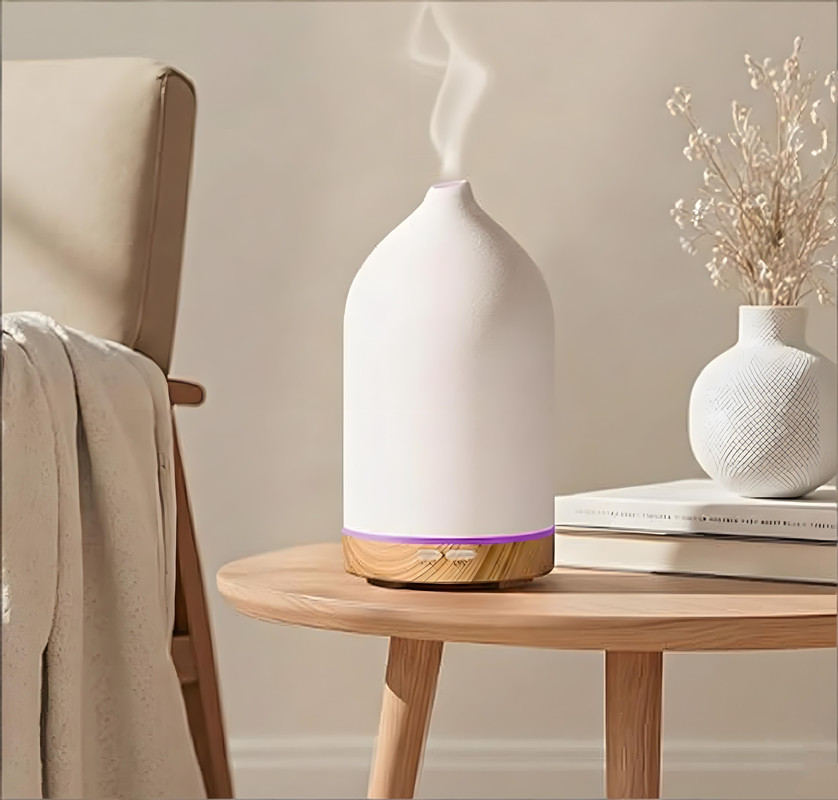
The ultrasonic diffuser is the most common type on the market. At its core, it works much like a small humidifier with added fragrance. You fill the water tank, add a few drops of essential oil, and high-frequency vibrations turn the mixture into a cool, scented mist.
It delivers a strong scent that can fill a room quickly while also adding moisture to the air — a bonus in dry climates. Many modern models include convenient features such as timer settings, LED ambient lighting, and auto shut-off functions.
That said, ultrasonic diffusers do require regular cleaning to prevent mold or buildup inside the tank. Mist residue can also settle on nearby furniture or electronics if placement isn’t ideal. And while they’re relatively quiet, you may still notice a soft motor hum or water sounds. Since they need to be plugged in and refilled with water, they’re not the most travel-friendly option.
Bottom line: Ultrasonic diffusers are best for people who want added humidity and need to scent larger spaces like living rooms or master bedrooms.
The Reed Diffuser
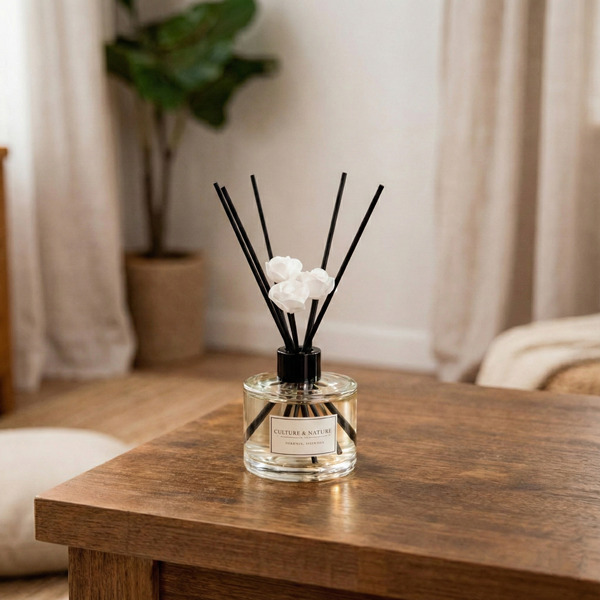
You’ve likely seen these in hotel lobbies or upscale bathrooms. It consists of a glass bottle filled with scented liquid and several wooden sticks. At its core, it relies on capillary action: the porous reeds soak up the essential oil from the bottle and release it into the air through natural evaporation—no heat, water, or electricity required.
It offers a completely silent, power-free experience that is also cost-effective. A single bottle can last for weeks or even months without needing a refill. Visually, they act as elegant decor, looking just as good on a shelf or countertop as they smell.
That said, the scent reach is limited, making them less effective in large, open rooms. In hot or dry environments, the fragrance may evaporate faster, shortening the diffuser’s lifespan. There is also a spill risk if the bottle gets accidentally knocked over. Plus, adjusting the intensity isn’t easy—you typically have to add more sticks or flip them frequently to get a stronger smell.
Bottom line: Reed diffusers are best for providing a constant background scent in smaller spaces like bathrooms, hallways, or entryways.
The Wood Diffuser
Wood diffusers represent one of the simplest and most timeless ways to enjoy fragrance. Often handcrafted from natural materials like solid walnut or beech, they typically come in the form of small blocks, stands, or sculptural pieces that blend easily into any space.
At its core, a wood diffuser works in much the same way as a reed diffuser. You apply a few drops of essential oil directly onto the wood, and through capillary action, the wood’s natural fibers absorb the oil and gradually release aroma through natural evaporation. There’s no water, no heat, and no electricity involved — just the natural breathability of wood doing the work.
This design aligns naturally with sustainability. Wood diffusers are reusable, biodegradable, and visually calming, offering a completely silent, spill-free experience with virtually no upkeep beyond an occasional wipe. Their solid, cordless form also makes them easy to carry, whether you’re moving between rooms or traveling.
Compared to electric diffusers, wood diffusers have a lower scent diffusion capacity, making them better suited for personal spaces rather than entire rooms. Because the wood holds a limited amount of oil, the fragrance typically lasts a few hours, so fresh drops are best applied shortly before use instead of being left to run all day.
Bottom line: Wood diffusers are ideal for personal moments — during sleep, focused work, meditation, or travel — especially for those who value natural materials, simplicity, and a more mindful approach to scent.

A Feature-by-Feature Comparison: Which Diffuser Fits Your Needs?
Now that you know the characteristics of all three, let’s compare the practical details to see which one is truly right for you.
Round 1: Noise & Sleep Quality (The “Insomnia” Test)
If you are a light sleeper, this category is the dealbreaker.
- Ultrasonic: Manufacturers love to label these as “whisper quiet,” but that’s not the whole truth. Because they use a motor plate to vibrate water, there is always a faint electrical hum. Plus, you will often hear the sound of water trickling or dripping inside the tank. For some, it’s white noise; for sensitive sleepers, it’s annoying.
- Reed & Wood: Both are 100% physically silent. There are no motors, no water movement, and no electricity.
🏆 Winner: Tie between Wood & Reed. If you need absolute silence to sleep, ditch the electric machine.

Round 2: Maintenance (The “Laziness” Test)
Be honest with yourself: how often do you actually want to clean your diffuser?
- Ultrasonic: This is the highest maintenance option. If you don’t empty and scrub the tank weekly, microbial buildup and bacteria will grow inside. You’re essentially breathing in whatever is in that water tank. For users who enjoy routine care and want added humidity, this maintenance may feel worthwhile.
- Reed: Requires zero cleaning, but you do need to flip the oily reeds every few days to keep the scent strong, which can leave your fingers smelling like perfume.
- Wood: The clear winner for low-effort users. There are no tanks to scrub and no reeds to flip. Learning how to use a wooden diffuser is simple: you just add oil when you want scent. Over time, the oil actually conditions the wood, giving it a beautiful patina
🏆 Winner: Best Choice for Low-Effort Users: Wood Diffuser.
For those who prefer minimal upkeep and on-demand use, wood diffusers require the least ongoing attention.
Round 3: Safety & The “Mess” Factor
Do you have curious cats, toddlers, or expensive furniture?
- Reed: This is the riskiest option. It is essentially an open bottle of oil sitting on a table. One tail wag from a cat or an accidental elbow bump, and you have an oil spill that can strip the finish off your table permanently.
- Ultrasonic: Safer from spills, but they produce a wet mist. If placed on a wooden nightstand without a coaster, the moisture residue can damage the wood surface over time.
- Wood: Since the oil is absorbed into the wood block, there is nothing to spill. Even if you knock it off the nightstand, it’s just a block of wood hitting the floor—no liquid mess, no broken glass.
🏆 Winner: Best Option for Safety-Conscious Homes: Wood Diffuser.
Its solid, spill-free design makes it especially suitable for households with pets or children.

Round 4: Scent Reach vs. Portability
This comes down to what you value more: Power or Freedom.
- Ultrasonic: It wins on Power. It actively pumps scent into the air, making it the only choice if you need to fragrance a large open-concept living room (500+ sq. ft.). However, it is leashed to a power outlet.
- Reed: Good for constant, low-level background scent in a medium room, but you can’t move it easily once it’s open. For users who want a set-and-forget decorative scent, this consistency can be a plus.
- Wood: It wins on Freedom. Because it’s cordless and solid, you can toss it in your bag, take it to the office, use it in the car, or place it on a yoga mat. The trade-off is that the scent is intimate—it won’t fill a whole room, but it creates a perfect personal zone.
🏆 Winner: It depends. Choose Ultrasonic for large rooms, and Wood for personal freedom.
So, Which Diffuser Is Right for You?
Still undecided? Let’s simplify it. Here is our honest recommendation based on your lifestyle:
✅ Go with the Ultrasonic Diffuser if:
- You need to scent a large, open space (like a living room or master suite).
- You live in a dry climate and want the added benefit of a humidifier.
- You don’t mind the weekly cleaning routine to keep mold away.
✅ Pick the Reed Diffuser if:
- You want a “set it and forget it” background scent for a bathroom, hallway, or guest room.
- You care about home decor and want something that looks elegant on a shelf.
- You don’t have cats or toddlers who might knock it over.
✅ Choose the Wood Diffuser if:
- You value your sleep: You need absolute silence (no motor hum, no water sounds).
- You value safety: You have pets, kids, or nice furniture and don’t want to risk spills or moisture damage.
- You hate cleaning: You want a minimal maintenance option that just works.
- You want focus or relaxation: You prefer a personal scent bubble for your desk, bedside table, or meditation corner.
Ready to explore your options?