
Blog
How Do Wood Diffusers Work?

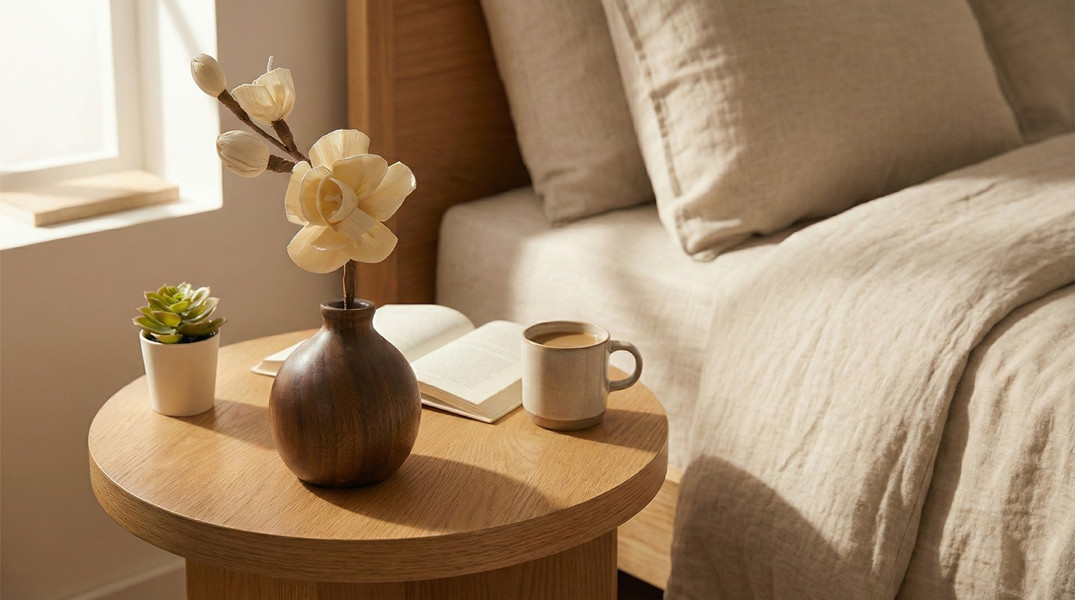
Have you ever seen those beautiful wooden blocks on Instagram or Pinterest and wondered, “Can a simple piece of wood really make my room smell good? Does it actually work, or is it just decorative?”
The truth is, there’s nothing mysterious about it. Wood diffusers don’t need cords, water, reeds, or any complicated setup. All it takes is a piece of natural wood and a few drops of essential oil — and they work their magic.
So, how exactly does a solid block of wood manage to release fragrance without heat or electricity To appreciate the experience,let’s first understand the biology behind it.
The Biology: How Does a Chunk of Wood Spread Scent?
To understand this, we must look at the structure of the tree itself.
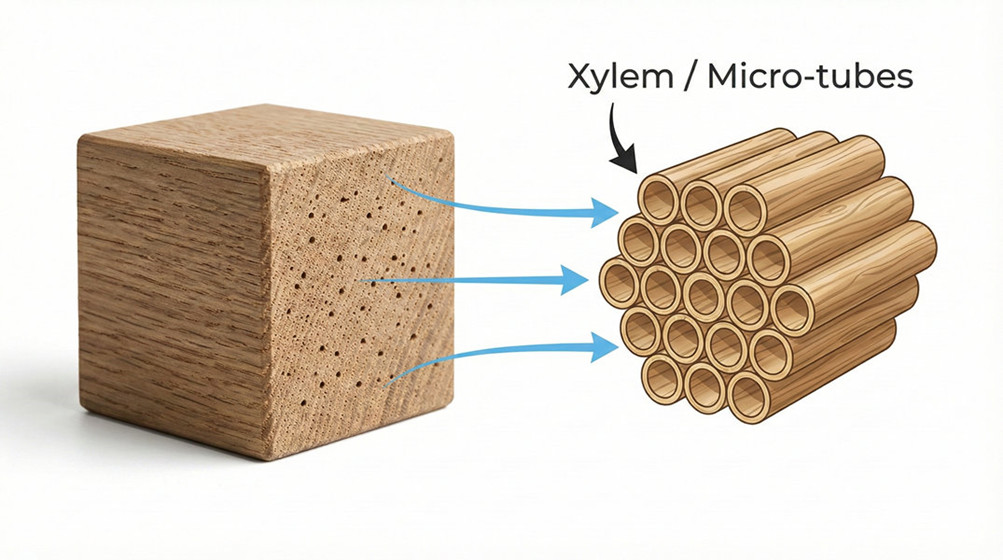
When a tree is alive, it functions like a massive vertical piping system. It contains millions of microscopic tubes (known as Xylem) that are responsible for transporting water and nutrients from the roots all the way up to the leaves.
When we craft wood into a diffuser, these tiny vessels don’t disappear. Instead, they remain as empty reservoirs, waiting to be filled. When essential oils are applied, the wood begins to radiate fragrance.
This process relies on two key principles:
Capillary Action (The Sponge Effect): When essential oil is dripped onto the wood, it absorbs just like a sponge drinking water. The oil is drawn deep into the wood’s microscopic capillaries, locking the fragrance within the grain.
Passive Diffusion (The Slow Release): Unlike electric diffusers that instantly blast mist into the air, a wood diffuser is a form of passive diffusion. The essential oil stored inside evaporates naturally at room temperature. As air flows over the wood, it gently carries the scent molecules to your nose.
Is a Wood Diffuser Right for You?
Because wood diffusers rely on natural evaporation rather than a motor, physics dictates that the scent won’t travel across a 500-square-foot room.
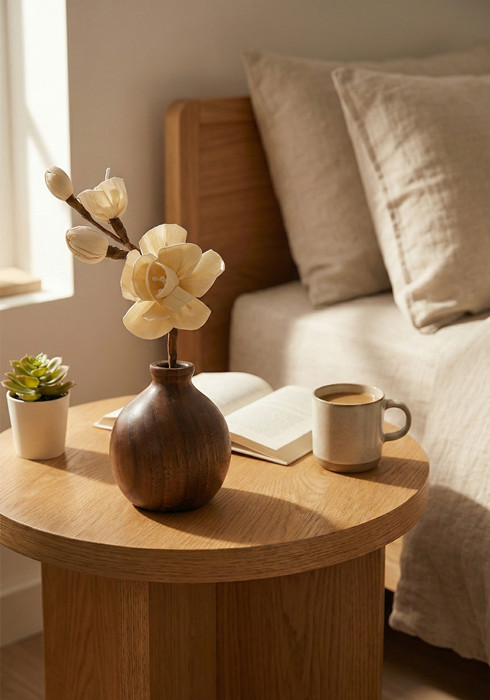
Instead, it creates an intimate zone of fragrance around the wood—usually about 1 to 3 feet (30 to 90 cm). This makes them mechanically perfect for spaces where you want the scent for yourself, not for the whole building.
If you are looking to create a “Personal Scent Bubble” to enjoy aromatherapy without bothering others, a wood diffuser is likely the perfect match for you.
Which Wood Makes the Best Diffuser?
You might be wondering, “Can’t I just use leftover scrap wood from my home renovation?”
Technically, you could, but the results wouldn’t be great. Not all wood is created equal—the specific species of wood matters immensely.
- Softwoods (e.g., Pine): These are simply too porous. While they drink up the oil instantly, the fragrance evaporates far too quickly to be effective.
- Varnished or Treated Wood: This simply won’t work. If the wood’s natural pores are sealed by lacquer or varnish, the oil will just sit on the surface, creating a sticky mess.
- The Perfect Choice (Hardwoods): We specifically select dense hardwoods like Walnut, Beech, Cherry, or Rosewood. These woods possess the perfect density balance—they hold the essential oils effectively and release them slowly over hours or even days. Plus, they interact with the oils, adding a warm, woody undertone to any fragrance.
Wood Diffuser vs. The Alternatives: Which Fits You Best?
Let’s be clear: there is no “best” diffuser for every situation. It depends entirely on your unique needs.
If you are still weighing your options, we’ve put together a comprehensive guide comparing Ultrasonic vs. Reed vs. Wood Diffusers to help you decide. But in short:
If you need to humidify a large open space, an ultrasonic diffuser (Active Diffusion) is your friend. But if you want a quiet, intimate scent experience without the hassle of cords, wood (Passive Diffusion) is the answer.
Here is a comparison of the common diffuser types on the market to help you find the product that fits you best:
| Feature | Wooden Diffuser | Ultrasonic (Electric) | Reed Diffuser |
| Method | Passive (Natural Evaporation) | Active (Ultrasonic Vibration) | Passive (Wicking via Reeds) |
| Reach | Intimate (The “Scent Bubble”) | Broad (Fills a room) | Medium (Ambient) |
| Best For | Your desk, bedside, or car | Living rooms & open spaces | Bathrooms & Hallways |
| Noise | 100% Silent | Hum / Water bubbling | Silent |
| Maintenance | Zero (Just wipe it) | High (Clean tank weekly) | Medium (Flip reeds) |
| Safety | Pet/Child Friendly | Cord/Water/Mold risk | Spillage/Solvent risk |
Quick Guide: How to Use Your Wood Diffuser
If this is your first time discovering them, you might be wondering exactly how to use wood diffusers. Don’t worry—it’s incredibly simple. Just follow these quick steps:
- Find Your Spot: Place the diffuser on a flat, stable surface that you love. Keep it away from direct sunlight (heat makes the oil evaporate too fast!). Small spaces like your desk or bedside table work best.
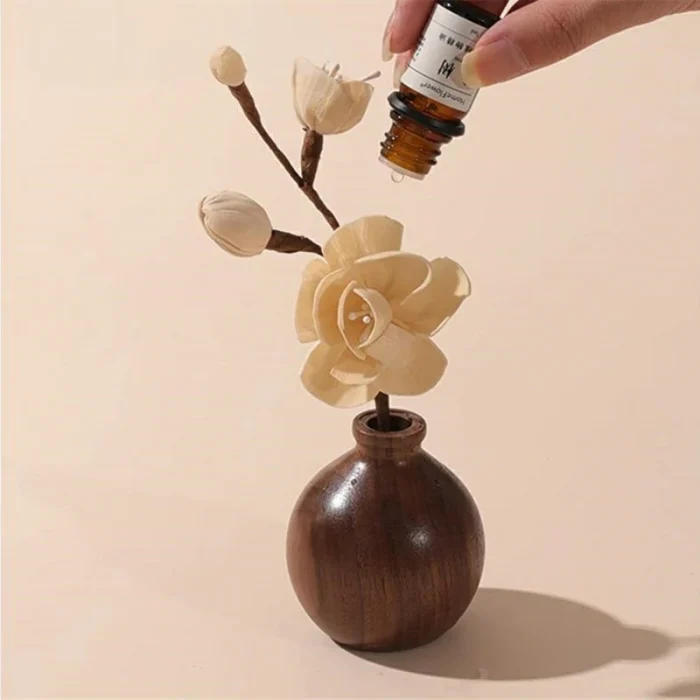
- Apply the Oil: Drip 3–8 drops of essential oil directly onto the wooden surface. For your very first use, we recommend starting with a smaller amount to test the scent strength.
- Let it Absorb: Don’t rush it. Give it about 20 minutes to fully drink in the oil and begin radiating the fragrance.
- Adjust the Intensity: If the scent fades, simply add more drops. If it feels too strong, just use a bit less next time.
And just like that, you are ready to enjoy the full charm of natural aromatherapy.
FAQ: Understanding the Mechanics
It depends entirely on the “Volatility” of your essential oil.
Top notes (like Lemon or Eucalyptus) are light molecules that evaporate quickly, usually in 2-3 hours.
Base notes (like Cedarwood or Sandalwood) are heavier and can linger in the wood grain for 24 hours or more.
Yes, and this is intentional. As the wood repeatedly absorbs oil, it will darken and develop a natural sheen called “Patina.” This physical change is a sign that the wood is well-nourished and functioning correctly, not a stain. It’s a beautiful record of your use.
Because pure essential oils are naturally antimicrobial and wood diffusers don’t use standing water, mold is rarely an issue (unlike water-based humidifiers). The wood naturally “breathes,” keeping the experience clean and safe without complex maintenance.
Not forever. While the wood holds the scent longer than a tissue, the oils do eventually evaporate. This allows you to switch scents or layer new notes on top of old ones (a technique called “Scent Layering”) without “ruining” the diffuser.
Why Simple is Often Better
By now, you should appreciate the quiet charm of the wood diffuser. It doesn’t beep at you, and it doesn’t need to be charged. It simply sits there quietly as a beautiful piece of decor, delivering fragrance and inviting you to enjoy a moment of tranquility.
Whether you are looking to sharpen your focus at work or unwind before deep sleep, this is the natural choice.
Ready to start exploring our Wood Diffuser collection?
We hope you find the perfect match for your lifestyle.